How we work, in full
The long version: what we build, how a build runs from the first conversation to the handover, and what you end up owning.
01Definition
What Groundwork is
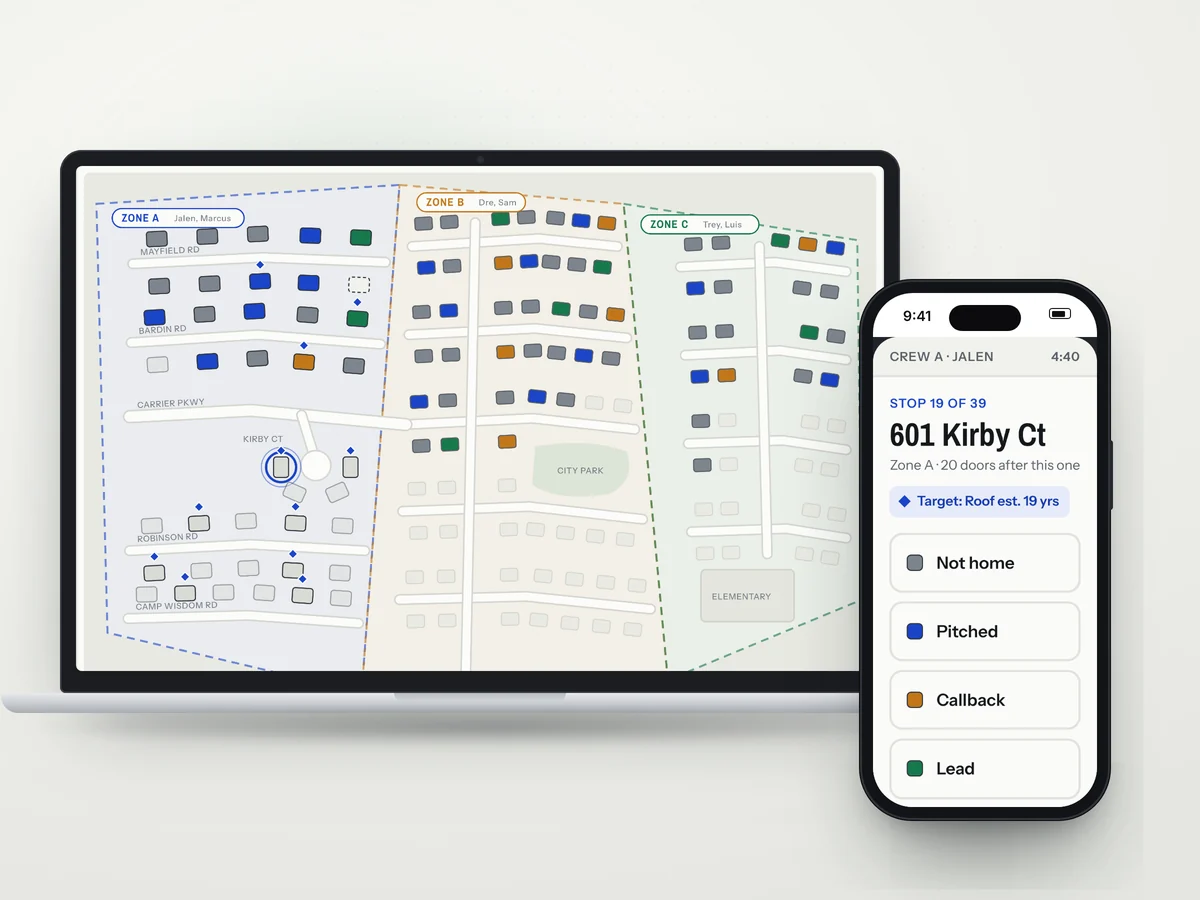
Groundwork builds the systems businesses do not have the people to build.
That means custom websites and web applications, internal tools and dashboards, automations that move work between systems, and the data plumbing that connects the software you already pay for. That is 9 kinds of work, all of it built for one business rather than assembled from a template.
It is not an AI agency. AI is part of how the work gets produced, in the way a compiler is part of how software gets produced. What you buy is a working system, and the tooling behind it is our problem rather than yours.
Everything transfers when it is done. The build, the code, the data and the accounts end up in your name, and the system keeps running whether or not you keep paying us.
02Origin
Why it exists
Businesses do not usually lose because the work is bad. They lose because someone else got faster at the same work.
The other firm quotes the same day. They take a booking without a phone call. They know which job is running late before the customer has to ask. Nothing looks wrong on your side. The work is still good. It is just slower, and slower is the part a customer notices.
The gap opens quietly, and that is what makes it dangerous. There is rarely a week where it becomes obvious. There is a quote that went elsewhere, then a repeat customer who stopped repeating, and by the time it shows up in the numbers it has been true for a year.
The usual fix is to rent something, and it works up to a point. The platform does most of what you need, the monthly is affordable, and the problem goes quiet. The catch arrives later: the system your business runs on is a subscription, your data sits inside it, and the day you stop paying you lose the thing you were paying for. The argument is not that those products are bad. It is that renting the thing your business runs on means never owning the thing your business runs on.
Groundwork exists to build the other option. A system that fits the way you already work, priced once, and handed over.
03Audience
Who this is for
- Someone rekeys the same information into two systems every week.
- The answer to "where is that job up to" is a phone call.
- Your prices, your stock or your schedule live in one person’s spreadsheet.
- A competitor quotes the same day and you take three.
- You pay monthly for software that does most of what you need.
- The busiest person in the building is the bottleneck for everything.
Any of these is the gap. It opens quietly, and it costs accounts you assumed were safe.
04Process
How the work runs
Discovery
We go through the work you do now, step by step, including the parts held together by someone remembering to do them. Usually an hour or two, and it is free.
Scope
You get a written scope: what gets built, what it costs, and how long it takes. A fixed price, not an hourly estimate that moves.
Build
The work happens in short passes. You see it running early and often, on a real link you can open, rather than in a status update.
Integrate
It gets connected to the tools you already pay for, and your real data goes in. This is the part that is usually skipped, and it is the part that decides whether anyone uses it.
Launch
We put it live, move the accounts into your name, and sit with whoever has to use it until they are comfortable.
Support
Ongoing care if you want it, nothing if you do not. Either way the system is yours and it keeps running.
05Speed
How long it takes
Days, not months.
Small builds go live in days. Most are running inside a month or two. You get the timeline in the quote, before anything starts.
Software is quoted in quarters because it is usually being built twice: once to work out what was wanted, then again properly. We scope first, so it gets built once.
06Mechanism
How a system works
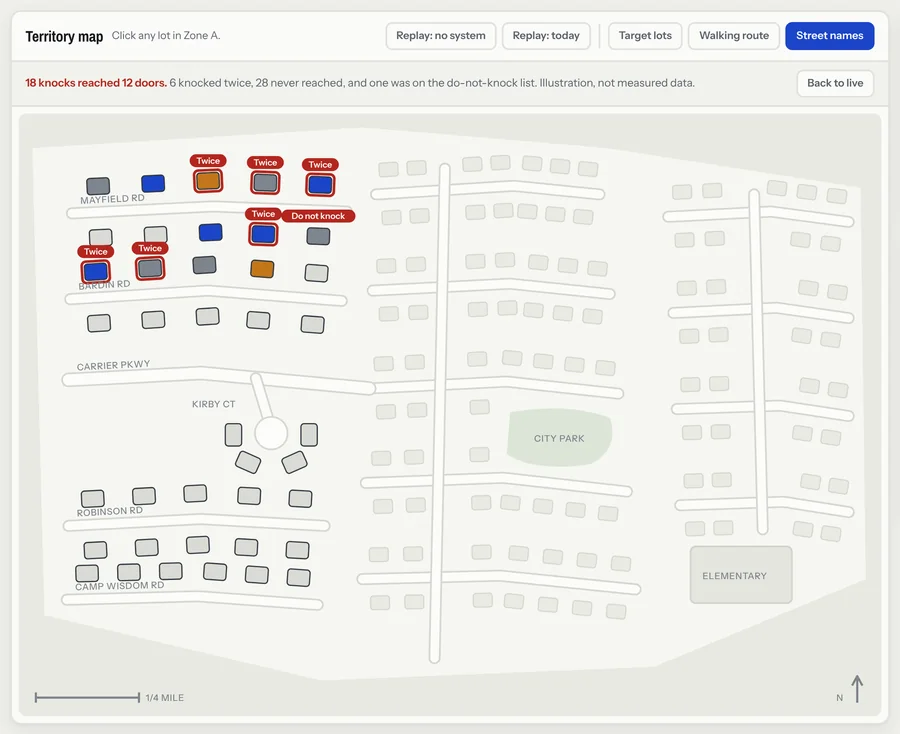
Worked example: Territory and canvass management
Every system works this way. Something you already have goes in, something you can act on comes out, and the part in the middle stops being somebody's job.
Goes in
Your territory, your address list and your reps. Whatever you already hold, in whatever shape it is currently in.
The system does
Splits the ground into areas, assigns them, and records every visit against an address as it happens, from a phone, offline if the signal drops.
Comes out
A live map of what has been covered and what has not, who did it and when, and a list of the addresses worth going back to.
07Difference
Why us
- Priced by the hour, so the estimate moves.
- Priced as a scope, agreed before anything starts.
- A template, bent until it roughly fits.
- Built for the way your week actually runs.
- Quoted in quarters, because it gets built twice.
- Days for small builds, a month or two for most.
- You rent it. Stop paying and it switches off.
- You own it. Stop paying us and it keeps running.
- Support is the leash that keeps the licence alive.
- Support is a service you can take or leave.
08Stack
What we build with
Boring, well-supported tools. The interesting part is what gets built with them, not the list.
- This site
- AstroTypeScriptSelf-hosted typeCloudflare Pages
- Web and apps
- TypeScriptAstroReactNode
- Data
- PostgreSQLSQLiteScheduled jobsREST and webhooks
- Automation
- Custom servicesQueue workersEmail and SMS delivery
- Hosting
- CloudflareManaged PostgresObject storage
09Contact
Get in touch
For anything that is not a quote, email groundworkstudio.tx@outlook.com.
We reply within one to two business days, often sooner.